Showing posts with label internet. Show all posts
Showing posts with label internet. Show all posts
Saturday, October 15, 2011


Thursday, July 28, 2011
How to Win More Sales with Less Effort
Follow-Up Marketing:
How to Win More Sales with Less Effort

 What Does a Good Follow Up System Look Like?
A good follow up marketing system should have three attributes.
How to Win More Sales with Less Effort
by David Frey

A study done by the Association of Sales Executives revealed that 81% of all sales happens on or after the fifth contact. If you’re a small business owner and you’re only doing one or two follow-ups imagine all the business you’re losing. Not following up with your prospects and customers is the same as filling up your bathtub without first putting the stopper in the drain!
But don’t be disheartened if you’re among the 90% of business owners I talk to that don’t do any follow up. The good news is you have ample room for profitable improvement. Consistent follow-up creates a predictable and profitable stream of prospects and customers that buy. Small businesses that capture leads and follow-up with them enjoy higher conversion rates and a higher percentage of referrals than those that don’t.
After asking many small business owners the reason they don’t follow up I often hear responses such as, "I don’t have the sales staff to chase down all our leads", or "We’re usually too busy to do a lot of follow up." These responses automatically set off red flags that tell me that they lack a systematic process for following up. The problem is not that they don’t have the capacity to follow up with prospects, it’s that they don’t have the systems in place to do it.
 What Does a Good Follow Up System Look Like?
 A good follow up marketing system should have three attributes.
- It should be systematic, meaning that the follow up process is done the same way every time.
- It should generate consistent, predictable results.
- It should require minimal physical interaction to make it run, meaning it should be able to run on autopilot.
Sounds like a dream come true for most small business owners doesn’t it? Not only can it be done, it’s being done every day. The secret to "follow-up marketing" is to make it automatic so that you don’t have to lift a finger but the job still gets done. With today’s technology it’s simpler than ever. Automating your follow-up processes gives you more time to work "on" your business rather than "in" your business.
Three Types of Follow Ups
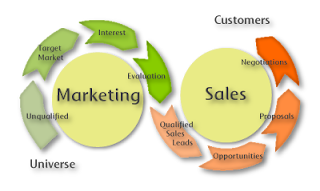
There are three types of people you should be following up with, suspects (people in your target marketplace), prospects (people who have responded to your marketing but have not purchased, and customers (people who have purchased something from you.) Each follow up message and offer will be different for each type of person. With suspects, you’ll want to entice them to call you or visit your store / office. With prospects, you need to persuade them to make their first purchase. And with customers, you want to convince them to come back and do more business with you and give your referrals.
There are three types of people you should be following up with, suspects (people in your target marketplace), prospects (people who have responded to your marketing but have not purchased, and customers (people who have purchased something from you.) Each follow up message and offer will be different for each type of person. With suspects, you’ll want to entice them to call you or visit your store / office. With prospects, you need to persuade them to make their first purchase. And with customers, you want to convince them to come back and do more business with you and give your referrals.
Obviously the hardest type of person to follow up with is a suspect because they haven’t shown any interest yet in a pool or hot tub and you usually don’t have their contact information. But that’s not true with prospects and customers. You not only know who they are, but you should already have their contact information. And if you follow up with your customers with consistency you’ll find that they will help you turn your suspects into prospects and prospects into customers for you through referrals.
Your Follow Up Marketing Tools
Your principal follow up marketing tools are the telephone, direct mail, and email. Many pool and hot tub business owners make the mistake of jumping right on the telephone to follow up; however, most prospects don’t want a pushy sales message right away and most prospects have been trained to consider anyone who calls up to be a pushy salesperson. Instead, you should try to develop a relationship of trust with your prospect by quickly sending informational items such as special reports, audio CDs, or videos before you make a phone call.
Your principal follow up marketing tools are the telephone, direct mail, and email. Many pool and hot tub business owners make the mistake of jumping right on the telephone to follow up; however, most prospects don’t want a pushy sales message right away and most prospects have been trained to consider anyone who calls up to be a pushy salesperson. Instead, you should try to develop a relationship of trust with your prospect by quickly sending informational items such as special reports, audio CDs, or videos before you make a phone call.

Remember to always include a "next-step-offer" to accompany your educational materials. If the next step is to visit the store, then entice them with an appropriate offer or if the next step is to call you, entice your prospect to call you immediately. People move through the buying process in baby steps, especially when considering buying high-ticket items such as hot tubs or pools. Your offer should always help them take the next step.
Your Follow Up Sequence
The power of your follow up will lie in your follow up sequence. Your follow up sequence is a series of communications with your prospect that are "linked" together, with each communication building on the previous message. For instance, you might start your second letter by saying, "10 days ago I sent you a letter..." You might also consider stamping the message, "2nd Notice" on the envelope to let people know this is the second time you’ve contacted them. Referencing the previous communication links what you’re saying with what you’ve already said and reminds your prospect that you care enough to continue the conversation.
The power of your follow up will lie in your follow up sequence. Your follow up sequence is a series of communications with your prospect that are "linked" together, with each communication building on the previous message. For instance, you might start your second letter by saying, "10 days ago I sent you a letter..." You might also consider stamping the message, "2nd Notice" on the envelope to let people know this is the second time you’ve contacted them. Referencing the previous communication links what you’re saying with what you’ve already said and reminds your prospect that you care enough to continue the conversation.
Usually, when doing direct mail you should include three to five mailings spaced out about seven days apart. When using a sequential autoresponder you can have as many follow ups as you want because using email is basically free (that’s why you always want to get a prospects email address). One of my clients has over 20 follow-ups in his autoresponder sequence that go out over a six month period.
Each sequence should follow a logical argument and you might consider bolstering the offer with each communication using a deadline as a motivator to act now. As an example, in the third communication you could say, "I’m surprised you haven’t taken me up on my generous offer. What’s holding you back?" Or consider saying, "I’ve written you three times and you still haven’t taken me up on my offer so I’m going to pull out all the stops and make you an offer you simply can’t refuse." Notice how the language always links the previous communication and increases the boldness of the offer. It’s the same type of conversation you might have in a regular sales conversation.
How to Put Your Follow Up Marketing System on Autopilot
What I’m about to reveal to you is the key to developing a powerful follow up marketing system because it overcomes the number one reason most businesses don’t follow up. You must automate your follow up system as much as possible so that there are few, if any, physical interactions from your employees with the system. It’s the required physical interactions (i.e. printing letters, sending emails, inputting leads etc.) where 99% of all the breakdowns happen in well-intentioned follow up marketing systems.
What I’m about to reveal to you is the key to developing a powerful follow up marketing system because it overcomes the number one reason most businesses don’t follow up. You must automate your follow up system as much as possible so that there are few, if any, physical interactions from your employees with the system. It’s the required physical interactions (i.e. printing letters, sending emails, inputting leads etc.) where 99% of all the breakdowns happen in well-intentioned follow up marketing systems.
To automate your follow-ups you should consider using robotic marketing systems and outsourcing any manual interactions to a dedicated service. For instance, to capture your leads you should consider using a toll-free automated recorded message system that captures your prospects contact information and automatically transcribes it and sends your leads to you in a spreadsheet every morning via email.
If you’re using a direct mail follow up system (and you should be), find a fulfillment house to do the mailings for you. To find a fulfillment house, simply go to your local printer and ask them to refer you to a fulfillment house in the area.
Now step back for a moment and see the power of what I’ve just revealed to you. Imagine running an ad, having your prospect call up and give their contact information via your recorded message system. Then having your leads automatically sent to your fulfillment house via email, after which your prospect receives a five-sequence direct mail package containing your most persuasive marketing message -- without you lifting one finger!
You can set up the exact same type of "hands-free" follow up marketing system using an email autoresponder system. Your prospect will not only be receiving your direct mail messages, but you can insert your email messages in between your mailings.
What About Calling to Follow Up?
You’ll notice that I didn’t say anything about calling your prospect. That’s because you want your prospect to have already received your educational marketing messages and have most of their questions answered before they call you. An educated prospect is your best prospect.
You’ll notice that I didn’t say anything about calling your prospect. That’s because you want your prospect to have already received your educational marketing messages and have most of their questions answered before they call you. An educated prospect is your best prospect.
They already know why you’re different, what your value proposition is, and how you’re uniquely qualified to meet their needs. In essence, they’ve pre-qualified themselves before you ever have to spend time physically speaking to them. This drastically reduces the sales cycle and increases your conversion rate because you have positioned your small business to be their only logical choice.
Conclusion
Follow-up marketing will boost your closing rate and dramatically increase your customer satisfaction. Following up with systematic processes allows you to leverage your salespeople’s time and enhance their productivity, which will result in more sales with less effort and isn’t that what you want? Start winning more sales today by implementing your own follow-up marketing system.
Follow-up marketing will boost your closing rate and dramatically increase your customer satisfaction. Following up with systematic processes allows you to leverage your salespeople’s time and enhance their productivity, which will result in more sales with less effort and isn’t that what you want? Start winning more sales today by implementing your own follow-up marketing system.
Happy follow up marketing!
© Copyright 2003 David Frey, Marketing Best Practices Inc.
Friday, July 1, 2011
The Art of Follow-Up
The Art of Follow-Up

What's the most important marketing skill? You might be surprised at the answer.
It's not having a great marketing message, powerful marketing materials and a bullet-proof marketing plan. All of those are certainly important but not as important as...
***Follow-up***
But people want to believe that myth, so they spend forever trying to perfect their message. Look, all your message can get you is some initial attention. That's all.
And virtually every single marketing action after that is follow-up.
When someone shows some interest in your services (when you deliver a decent, but not mythical, marketing message), you need to follow-up with some more information.
Once they've read that information, you need to follow-up to determine if there's a deeper interest. And if there's a deeper interest, then you need to follow-up to set up an appointment.
But it doesn't end there.
Once you have an appointment, you need to follow-up to confirm that appointment (yes, people flake out). And once you've had the appointment you need to follow-up with a proposal or to close the sale. Follow-up never ends.
Follow-Up Secrets
Here are some follow-up secrets I've learned over the years that are important to understand and master if you're going to attract more clients.
1. Know where you are in the game
3. Don't move too slow
4. Balance fast and slow
6. When to stop following-up
7. Create follow-up systems
To streamline your follow-up, create systems you can use over and over again. A follow-up system consists of specific steps you take each step of the way.
It might work something like this:
I invite you to use it to build yours.
*
The More Clients bottom line: The skill of follow-up is the glue that holds all of your marketing together. It's what bridges the gaps between initial connections, information, meetings and proposals. Make it a priority to master this skill as soon as possible.

What's the most important marketing skill? You might be surprised at the answer.
It's not having a great marketing message, powerful marketing materials and a bullet-proof marketing plan. All of those are certainly important but not as important as...
But people want to believe that myth, so they spend forever trying to perfect their message. Look, all your message can get you is some initial attention. That's all.
And virtually every single marketing action after that is follow-up.
When someone shows some interest in your services (when you deliver a decent, but not mythical, marketing message), you need to follow-up with some more information.
Once they've read that information, you need to follow-up to determine if there's a deeper interest. And if there's a deeper interest, then you need to follow-up to set up an appointment.
But it doesn't end there.
Once you have an appointment, you need to follow-up to confirm that appointment (yes, people flake out). And once you've had the appointment you need to follow-up with a proposal or to close the sale. Follow-up never ends.
Follow-Up Secrets
Here are some follow-up secrets I've learned over the years that are important to understand and master if you're going to attract more clients.
1. Know where you are in the game
When you follow-up with someone, the purpose is to move the prospect from one base in the marketing game to the next base. If you try to jump bases (or move too fast), you tend to get rejected by the prospect. If you move too slow with your follow-up, you loose the interest you've generated up to that point.2. Don't move too fast
When you get someone's interest (say at a networking meeting) and then say you'd like to call back to talk with them, that's fine. But when you make that call and immediately try to set up an appointment, you'll likely get some resistance. Remember, people want more familiarity and some information before they meet with you. So your follow-up system needs to build that in. One way to do this is with pre-written emails and links to articles or to your web sites.
3. Don't move too slow
If you give a talk and get cards from people who are interested in knowing more about your services, how soon should you follow-up? The very next day. For each day you don't follow-up, interest wanes. If you have only a few follow-ups, use the phone. If you have many, send an email to set up a time to talk in the upcoming week. Stale follow-ups are just that. They've forgotten what interested them in the first place, so when you call back after several weeks it's like starting all over again.
4. Balance fast and slow
The key to effective follow-up is balancing the fast and the slow. Fast to get back to someone when they show interest; slow to get to know them. Fast to provide information requested; slow to discuss what this information means to their business. Fast to get a proposal in the mail; slow to discuss the details of that proposal.5. Watch your assumptions
What if someone doesn't get back to you? You've followed up promptly and you don't hear back right away. What does this mean? Only one answer: Who knows? It could be anything.But we are quick to jump to the conclusion that it's bad news. Not always. They might be very busy with a big priority or could even be out on vacation. So don't jump to conclusions. Just keep following up. Just watch that you don't sound desperate!

6. When to stop following-up
Let's say you have a prospect you've either met with or done a proposal for. You thought everything was going well, but they aren't returning your calls. Do you keep leaving messages or do you give up? What I recommend is leaving one last message that goes like this:"Hi John, I've been trying to get back to you about the project but haven't heard from you for a couple weeks. I don't want to keep pestering you, so if I don't hear back from you, I'll assume you don't want to move ahead. I'll leave the ball in your court. Please call if you want to take the next steps, but this is the last message I'll be leaving. Hope to hear from you. My number is ..."
This approach works. If they actually are interested, they'll call you back. If they don't, well there's your answer. It's time to move on.
7. Create follow-up systems
To streamline your follow-up, create systems you can use over and over again. A follow-up system consists of specific steps you take each step of the way.
It might work something like this:
a) prospect learns about your service and visits web siteOnce your follow-up system is designed and fine-tuned, you can use it reliably to turn many prospects into clients. This is exactly how I built my business. It didn't happen by chance.
b) prospect fills out form on the web requesting more information
c) prospect receives an automated email from you with web link
d) you send out personalized email requesting an appointment
e) you follow-up by email until appointment is set
f) you meet with prospect by phone
g) after phone appointment you send agreement
h) after a few days you send another email
i) after a few more days you leave a phone message
j) prospect ultimately gets back to you with a yes or no
I invite you to use it to build yours.
The More Clients bottom line: The skill of follow-up is the glue that holds all of your marketing together. It's what bridges the gaps between initial connections, information, meetings and proposals. Make it a priority to master this skill as soon as possible.
Tuesday, June 28, 2011
Current State of the Direct Selling Industry
Growing at a rate of 175,000 a week in the U.S. along it's never been better. Globally, it's half a million a week.
How To Analyze Best Direct Selling (Network Marketing) Company? - Sky News Report
Learn about one of the popular business model that works.
Its has been highly recommended by wealth experts, world leaders, Academic professionals and, Authors and Actors.
Why? Its affordable, It works- You will make money, Enhance team works and improve leardership skills etc.
Learn more and join our success team: Visit: www.emizaaj.com
Its has been highly recommended by wealth experts, world leaders, Academic professionals and, Authors and Actors.
Why? Its affordable, It works- You will make money, Enhance team works and improve leardership skills etc.
Learn more and join our success team: Visit: www.emizaaj.com
Sunday, June 26, 2011
ABC News Coverage: Direct Selling on the Rise
Benefits of direct selling
- Direct selling is a good way to meet and socialize with people.
- Direct selling offers flexible schedules.
- Direct selling is a good way to earn extra income.
- Direct selling is a good way to own your own business.
- Anyone can do it – There are no required levels of education, experience, financial resources or physical condition. People of all ages and from all backgrounds have succeeded in direct selling.
- You’re your own boss, which means you can:
- Work part-time or full-time – you choose when and how much you want to work.
- Set your own goals and determine yourself how to reach them.
- Own a business of your own with very little or no capital investment.
- Receive training and support from an established company.
Friday, June 24, 2011
Drip Marketing: Slow and Steady Wins the Customer
Drip Marketing: Slow and Steady Wins the Customer
 Drip marketing is the rather inelegant term for a marketing campaign that relies on repeated contact, or "touches," with a potential customer.
Unlike a leaky faucet, drip marketing is no accident. Successful drip marketing involves a carefully planned and thoughtfully targeted series of communications that will get your message across to customers and keep your company's name in their minds. As prospects move through the early stages of the sell cycle, drip marketing helps ensure that those potential customers become your actual customers.
 Building awareness is one of the most important advantages of drip marketing. It fixes your company name and message in the potential customer's mind.
Education is another important function. Drip marketing can inform prospects about your products and your industry by giving useful information while building trust in your company.
Drip marketing is especially effective if you have some insight into the prospect's buying cycle. Some kinds of goods, such as business computers and automobiles, tend to have a definite lifespan and are replaced every few years.
But the same message endlessly repeated loses effectiveness. Even though the themes remain the same, drip marketing requires variation in the way you present the message.
Once you've decided on your basic themes, you need to analyze your prospect list to determine which presentations are likely to be most effective with different groups. For example, a real estate agency will have some potential clients who are buying their first homes, some who are retiring and looking to downsize and some who are moving into the area. Each of these groups will benefit from a different approach. First-time buyers are likely to be interested in affordability. Older prospects looking to downsize will probably be more concerned about issues like tax implications and how to handle the sale of their existing home. By segmenting your prospects, you can provide them with the appropriate series of messages.
 Many drip-marketing products are specialized for particular industries. For example Norvax Inc.'s
LeadMiner is designed for insurance agencies selling health insurance. Agent 360 from RENWare Inc. is designed for real estate agents. Other software programs, such as Swiftpage, are more general and will work for many kinds of businesses.
Beyond the industries they serve, drip products vary enormously in what they do. In fact, drip marketing is more a buzzword than a product description. One must look beyond the term to see what a product actually offers.
The most basic drip marketing products are email auto-responders. These simply send a reply, or a series of replies, to queries emailed to your business. Even within this category there is variation. Some of these products, like Swiftpage, automatically assemble a leads database in addition to sending out email messages. Others, such as TriggerTouch, will start with visitor information from your Web site. Most of these programs will send a series of messages, spaced over a period of weeks or months, in response to an initial query. In effect, they automatically launch a drip marketing campaign aimed at the potential customer. The more sophisticated programs allow you to vary the content of the messages as well as their timing depending on your evaluation of the contact. Some of them even have advanced features: LeadMiner can automatically generate current quotes to be included in the emails.
But drip marketing can be much more than just email. It can also include direct mail contact, newsletters, telephone calls or on-site visits. In fact, just about any form of customer communication can be integrated into a drip-marketing campaign. Some drip-marketing software will also automatically remind you to call the lead or send out mailings.
Some CRM programs, such as ACT4Advisors, which is built on Sage Software Inc.’s ACT! CRM program, come with features that let you set up a drip-marketing program. In the case of ACT! that includes a series of sample letters on various topics.
Finally, there are a number of companies that specialize in running drip-marketing campaigns, such as MyMarketingPartner Inc. They can help you create your message and analyze your prospects, and can provide you with prewritten or customizable materials aimed at the various target groups. You work out the basics and they do the rest.
Email marketing is a particularly tricky business because of spam's current choke hold on email campaigns. In fact, most people who get a message from a company with whom they're not familiar are likely to assume it's spam.
Another problem with email marketing is that malicious emails have made people wary of opening attachments such as newsletters or reports.
The basic way around this problem is content combined with trust. To overcome the spam barrier you need an interesting message. You have to say something in which your potential customers are likely to be interested. Often that means giving them tips or other useful information.
Second, you need to build trust. Your prospects must trust you to give them something they want and not send them viruses. This is one limit for sending newsletters as attachments to emails.
Personalization also builds trust, both in your emails and in your company. As much as possible, include your prospects' names and other information — correct information — showing that they're not just a name on a mailing list. Also include information about who you are. For example, an email signed by the sales rep who will handle the account is more effective, especially if the email is from that rep's own email account.
Courtesy:http://www.insidecrm.com/features/drip-marketing-092308/
By Rick Cook | September 23, 2008
 Drip marketing is the rather inelegant term for a marketing campaign that relies on repeated contact, or "touches," with a potential customer.
Unlike a leaky faucet, drip marketing is no accident. Successful drip marketing involves a carefully planned and thoughtfully targeted series of communications that will get your message across to customers and keep your company's name in their minds. As prospects move through the early stages of the sell cycle, drip marketing helps ensure that those potential customers become your actual customers.
Advantages
 Building awareness is one of the most important advantages of drip marketing. It fixes your company name and message in the potential customer's mind.
Education is another important function. Drip marketing can inform prospects about your products and your industry by giving useful information while building trust in your company.
Who It's Good For
Drip marketing is ideal for high-value products with a long sell cycle, especially high-ticket items which are purchased at infrequent intervals. For example, mortgage companies and real estate agencies are big on drip marketing. So are health and life insurance agents. IT vendors whose products are purchased at infrequent intervals are also a rich market for drip marketers.Drip marketing is especially effective if you have some insight into the prospect's buying cycle. Some kinds of goods, such as business computers and automobiles, tend to have a definite lifespan and are replaced every few years.
Aim Your Drips
Drip marketing needs careful planning for maximum effect. You must decide on a basic theme or themes that you want your campaign to drive home.But the same message endlessly repeated loses effectiveness. Even though the themes remain the same, drip marketing requires variation in the way you present the message.
Kissing the Minimum Number of Frogs
On a percentage basis, drip marketing is not very efficient. It requires you to contact a number of people a number of times to drive sales. This doesn't mean drip marketing can't generate a lot of sales. Properly done, it can turn up many good prospects. But it does mean that you need to carefully focus your drip-marketing efforts. Paradoxically, while drip marketing uses mass-marketing techniques like email and direct mail, it becomes most effective when the messages are customized for specific audiences.Once you've decided on your basic themes, you need to analyze your prospect list to determine which presentations are likely to be most effective with different groups. For example, a real estate agency will have some potential clients who are buying their first homes, some who are retiring and looking to downsize and some who are moving into the area. Each of these groups will benefit from a different approach. First-time buyers are likely to be interested in affordability. Older prospects looking to downsize will probably be more concerned about issues like tax implications and how to handle the sale of their existing home. By segmenting your prospects, you can provide them with the appropriate series of messages.
Drip Systems
Fortunately, drip marketing lends itself to a high degree of automation. Equally fortunately, there are a number of tools to help you run a drip-marketing campaign, or alternatively a number of companies who will run your campaign for you. Many drip-marketing products are specialized for particular industries. For example Norvax Inc.'s
 LeadMiner is designed for insurance agencies selling health insurance. Agent 360 from RENWare Inc. is designed for real estate agents. Other software programs, such as Swiftpage, are more general and will work for many kinds of businesses.
Beyond the industries they serve, drip products vary enormously in what they do. In fact, drip marketing is more a buzzword than a product description. One must look beyond the term to see what a product actually offers.
The most basic drip marketing products are email auto-responders. These simply send a reply, or a series of replies, to queries emailed to your business. Even within this category there is variation. Some of these products, like Swiftpage, automatically assemble a leads database in addition to sending out email messages. Others, such as TriggerTouch, will start with visitor information from your Web site. Most of these programs will send a series of messages, spaced over a period of weeks or months, in response to an initial query. In effect, they automatically launch a drip marketing campaign aimed at the potential customer. The more sophisticated programs allow you to vary the content of the messages as well as their timing depending on your evaluation of the contact. Some of them even have advanced features: LeadMiner can automatically generate current quotes to be included in the emails.
But drip marketing can be much more than just email. It can also include direct mail contact, newsletters, telephone calls or on-site visits. In fact, just about any form of customer communication can be integrated into a drip-marketing campaign. Some drip-marketing software will also automatically remind you to call the lead or send out mailings.
Some CRM programs, such as ACT4Advisors, which is built on Sage Software Inc.’s ACT! CRM program, come with features that let you set up a drip-marketing program. In the case of ACT! that includes a series of sample letters on various topics.
Finally, there are a number of companies that specialize in running drip-marketing campaigns, such as MyMarketingPartner Inc. They can help you create your message and analyze your prospects, and can provide you with prewritten or customizable materials aimed at the various target groups. You work out the basics and they do the rest.
Avoid the Spam Trap
Badly done drip marketing is Chinese water torture for prospects. They may remember you, but they're unlikely to deal with you. Bombarding prospects with uninteresting or irrelevant messages is a great way to end up being ignored. In this day of spam filters and floods of junk mail, it's all too easy to wind up as part of the background noise rather than a signal.Email marketing is a particularly tricky business because of spam's current choke hold on email campaigns. In fact, most people who get a message from a company with whom they're not familiar are likely to assume it's spam.
Another problem with email marketing is that malicious emails have made people wary of opening attachments such as newsletters or reports.
The basic way around this problem is content combined with trust. To overcome the spam barrier you need an interesting message. You have to say something in which your potential customers are likely to be interested. Often that means giving them tips or other useful information.
Second, you need to build trust. Your prospects must trust you to give them something they want and not send them viruses. This is one limit for sending newsletters as attachments to emails.
Personalization also builds trust, both in your emails and in your company. As much as possible, include your prospects' names and other information — correct information — showing that they're not just a name on a mailing list. Also include information about who you are. For example, an email signed by the sales rep who will handle the account is more effective, especially if the email is from that rep's own email account.
Customizing on the Cheap
The big advantage of drip marketing is that it gives you a relatively low-cost, low-effort way of maintaining regular contact with leads who haven't yet made the critical buying decision. You can do this by other means, of course, but drip marketing lets you touch a lot more people effectively without wasting a lot of work. With drip marketing you can have more contact with more prospects without overloading your sales force or breaking your budget.Courtesy:http://www.insidecrm.com/features/drip-marketing-092308/
Wednesday, June 22, 2011
Make Money Online in Pakistan - Part 1 of 2 - as seen on CNBC
Make Money Online in Pakistan - Part 1 of 2 - as seen on CNBC
Make Money Online in Pakistan - Part 2 of 2 - as seen on CNBC
Subscribe to:
Posts (Atom)